

Why Kids Today Are Struggling More Than Ever
The Hidden Shift in Healthcare No One Is Talking About
It Starts With a Feeling
It usually doesn’t start with a diagnosis.
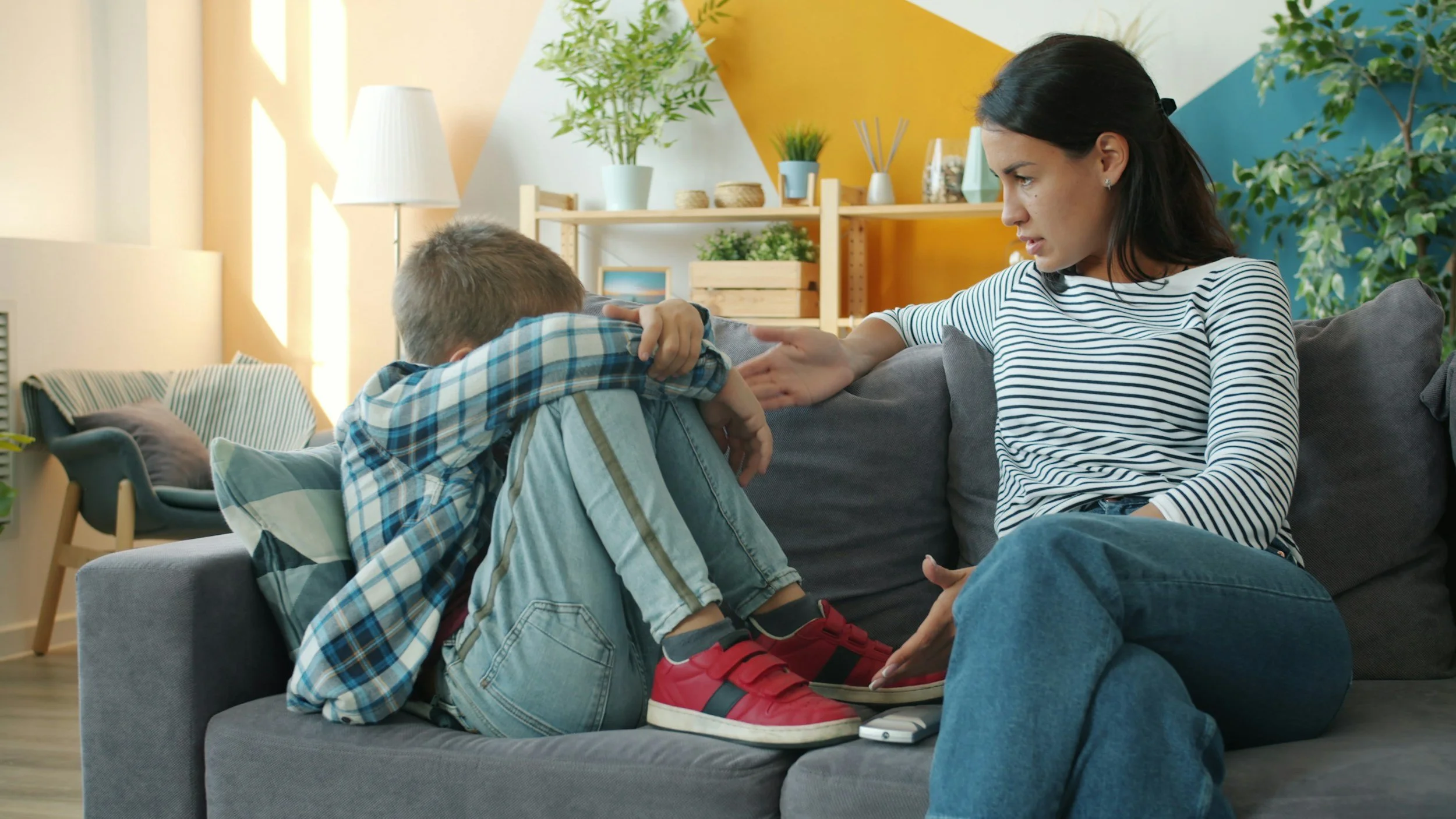
It starts with a mom noticing something she can’t quite explain. Her child isn’t sleeping the way they used to. They’re getting sick more often, and it takes longer to bounce back. Their emotions feel bigger, closer to the surface. They get overwhelmed more easily, or they seem wired and tired at the same time.
Nothing is clearly wrong, but something isn’t right, and she can feel it.
So she starts looking for answers. She talks to friends. She brings it up at appointments. Eventually, she finds herself sitting across from a doctor, trying to explain what she’s seeing, even though it doesn’t fit neatly into one category.
When Doctors Looked at the Whole Child
A hundred years ago, that conversation might have gone very differently.
A mother would bring her child to the family doctor, someone who often knew the family, their routines, and the rhythm of their life. In many cases, that doctor had cared for generations and understood not just the child, but the environment they were growing up in.
She wasn’t coming in with a diagnosis. She was coming in with a concern. Her child wasn’t settling well. Sleep was inconsistent. He was more sensitive, more reactive, slower to recover from illness, and not quite himself.
The doctor wouldn’t rush to label it. He would listen. He would ask about daily life, about meals, about time spent outside, about changes in the home. He would watch the child move, interact, and respond.
What he was really evaluating was something they used to call constitution. Constitution was the understanding that each child had a certain capacity, a way their body handled stress, environment, and life itself. When that capacity was strained, it showed up as patterns, not isolated symptoms.
And the goal was not to suppress the pattern.
It was to understand why the body was struggling to adapt.
What Life Looked Like Then
Children were raised inside a consistent rhythm of family life.
Many mothers were at home, closely connected to meals, movement, and the daily environment. Children spent their days moving, climbing, running, helping, and exploring. They developed coordination, strength, and awareness through natural movement, not prolonged sitting.
Meals were prepared at home from whole foods. Evenings were quieter. Sleep followed natural rhythms.
Pregnancy and birth followed that same pattern.
Mothers were more connected to their bodies and their environment. Birth most often happened at home, supported by familiar people. While not without challenge, it was generally less medicalized, and the baby’s first experience of the world was more contained and less overwhelming.
From the very beginning, the nervous system was learning.
What Changed - and Why It Matters
In 1910, the Flexner Report reshaped the direction of healthcare.
Backed by the Carnegie Foundation and influenced by industrial wealth, including the Rockefeller family, it standardized medical education and narrowed what would be considered legitimate care.
Many schools rooted in herbal, homeopathic, and whole-body approaches were closed.
Medicine shifted toward pathology, laboratory science, and pharmaceutical intervention.
This brought important advancements.
But it also changed the question.
Instead of asking why the body was struggling to adapt, the system began asking how do we manage what it is doing.

At the Same Time, Life Was Changing
Healthcare wasn’t the only thing shifting.
Life itself was speeding up.
As the decades progressed, especially through the Second-wave feminism, more mothers entered the workforce. Families became busier. Schedules filled. Time became more compressed.
Food changed. Meals moved from home-prepared to processed and packaged. Convenience replaced rhythm.
Childhood became more structured and performance-driven. Schools expanded, expectations increased, and children were asked to sit longer, focus earlier, and perform at higher levels. Activities and sports became more organized and competitive.
All of this added input to the nervous system.
What We Are Seeing Now
Today, the impact is hard to ignore.
Children are not just struggling with behavior. They are struggling with the capacity to handle the world they’re growing up in.
We are seeing increasing rates of ADHD, sensory challenges, spectrum diagnoses, anxiety, sleep disruption, digestive issues, and immune challenges. In more severe cases, we are seeing conditions like PANS/PANDAS, Lyme-related complications, POTS, and epilepsy.
And for many families, this isn’t something they can just wait out.
And for many families, this isn’t something they can just wait out. It becomes part of daily life—the school struggles, the constant worry, the mental load of trying to figure out what’s going on and how to help. It’s the quiet question that lingers in the background: will this ever feel easier?
At the same time, there are more resources than ever. More specialists. More therapies. More focus on the brain, the gut, and cellular health.
But most are still looking at one piece at a time, while the system coordinating all of it continues to be overlooked.
The Pattern Underneath It All
This is not just about symptoms.
It is about the nervous system’s ability to adapt.
Every experience, from pregnancy to birth to daily life, adds input to the system. And the nervous system doesn’t forget. It builds patterns from what it experiences.
When that input becomes too much or too constant, the body shifts into protection.
Over time, that becomes the baseline.
It affects how a child sleeps, digests, learns, regulates emotions, and connects with others.
This is not dysfunction.
It is adaptation that has reached its limit.

A Foundation That Was Never Meant to Be Lost
Hands-on healing is not new.
For generations, practitioners understood that the body was designed to heal when given the right input.
Chiropractic was founded in the late 1800s by D. D. Palmer with the understanding that the nervous system is what coordinates that healing.
When stress disrupts that system, patterns form.
When those patterns are addressed, the body can begin to shift.
What That Looks Like Today
This is why we don’t chase symptoms. We measure how the nervous system is functioning, because that is what determines how everything else works.
We assess where stress is being held. We identify patterns and begin to understand when they may have started.
Then we create a plan.
An adjustment gives the brain new information about what is happening inside the body. Over time, with consistent care, those signals begin to change the pattern.
The body softens. Sleep improves. Digestion stabilizes. Emotional regulation becomes easier. Connection improves.
Not because life is perfect.
But because the body is no longer stuck in protection.
Final Thought
When you are in the middle of it, it can be hard to see what has changed.
You are living your life, doing your best, making thoughtful choices, and responding to what is in front of you each day. The shifts are often subtle at first, small changes in sleep, mood, energy, or resilience that are easy to explain away or adapt around.
But when you step back and look at the bigger picture, it becomes easier to see.
Life has changed.
The pace has changed.
The demands have increased.
And with that, the load on the nervous system has increased as well.
Not all at once, but gradually, over time.
Each generation learning to handle more, adapt to more, and move through more input than the one before it.
This is not about something being done wrong.
It is about recognizing how much the body has been asked to carry.
And how that shows up in what we used to call constitution, a child’s capacity to handle stress, adapt to their environment, and move through life with ease.
For many families today, that capacity has simply been stretched.
Not broken.
Just stretched beyond what the system can easily regulate on its own.
And when we begin to support that system again, everything begins to feel possible again.
