Could Parasites Be Stressing the Nervous System?

What Parents Should Know About Parasites, Gut and Immune Stress, and the Capacity to Heal
Parasites have become a huge conversation among parents lately.
You hear about intestinal worms, liver flukes, parasite cleanses, binders, biofilms, full-moon protocols, gut rebuilding, and long lists of symptoms that leave parents wondering, “Is this something we should be looking at?”
That is a fair question.
What makes this conversation especially interesting to us is that parasites do not exist in isolation. They exist inside a host, and the condition of the host matters.
A child who is sleeping well, regulating efficiently, moving well, digesting well, and recovering well may have a very different experience with an internal stressor than a child whose system is already spending enormous resources managing poor sleep, chronic stress, digestive dysfunction, inflammation, frequent illness, sensory overload, or very little neurological reserve.
So rather than asking only, “Could my child have parasites?” we think there is another question worth asking: What happens when another internal stressor is added to a nervous system that is already running close to its limit?
That is where the parasite conversation becomes a nervous-system conversation.
The Condition of the Host Matters
There is an old farming idea that the struggling animal in the barn is often the one that gets overrun with pests first. It is not a perfect comparison, but the principle is easy to understand. When an organism is already depleted, stressed, or struggling to recover, an additional biological burden can become harder to manage.
Parasites, by definition, depend on a host. Some parasitic infections can also become more persistent or problematic when host defenses are compromised. The body still has to respond to the organism, maintain immune activity, preserve nutrition and hydration, manage inflammation, protect tissue, eliminate waste, and recover from whatever physiological burden is being created.
All of that requires resources.
This is why we are interested in far more than the parasite itself. We want to know what kind of host that parasite has encountered. Is this a child with plenty of adaptive reserve, or is this a child whose body has already been asking for help for years?
The parasite may be the stressor we finally recognize, but it may not be the first stress the body has been carrying.
Pregnancy Is Already the Beginning of the Child’s Host Environment
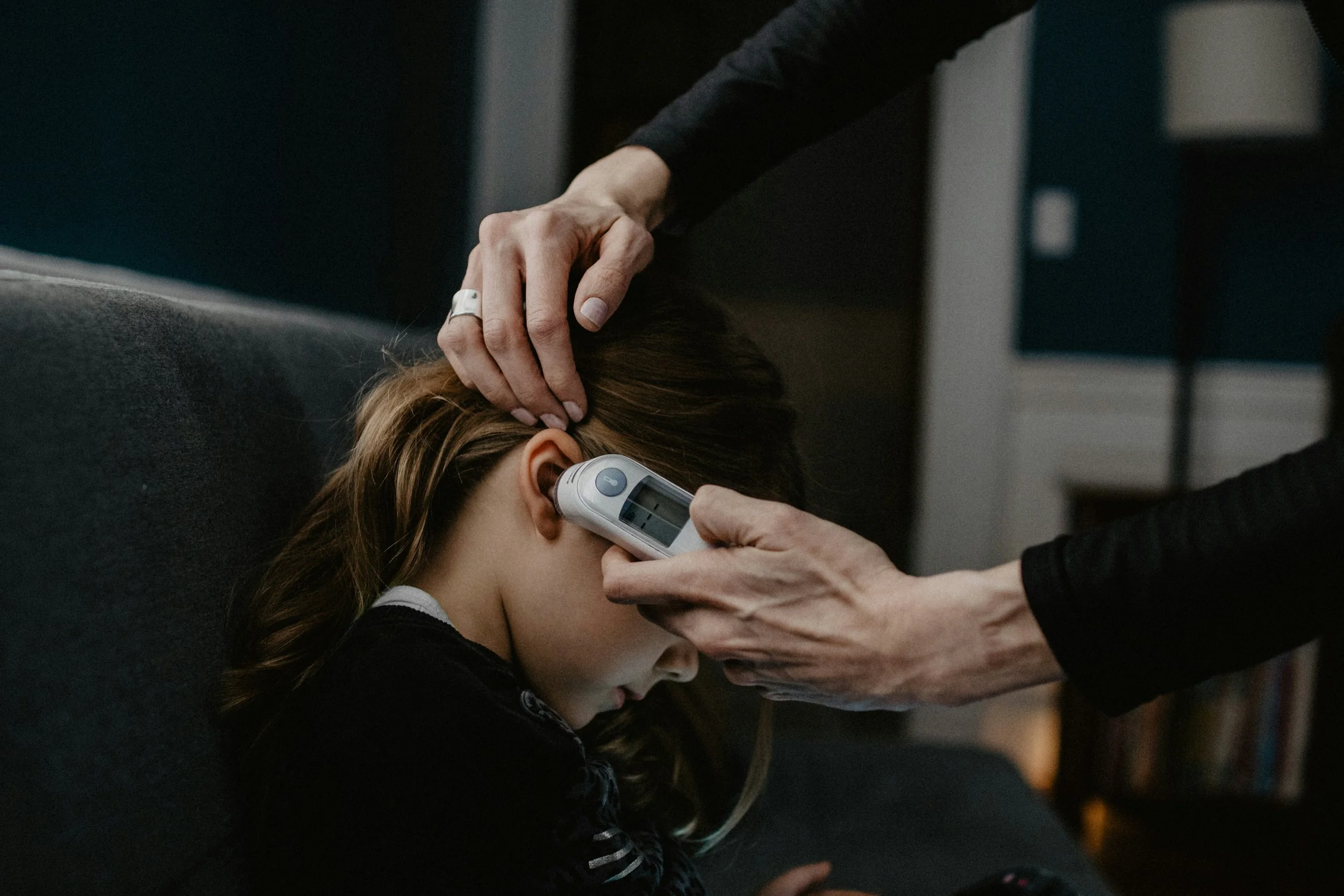
Pregnancy is already the beginning of the child’s host environment.
Long before birth, the developing baby is growing inside an immune, nutritional, hormonal, and neurological environment. Maternal health, nutrition, stress physiology, illness, medications, immune activity, placental function, and many other biological signals become part of that developmental environment.
After birth, the story continues. Feeding begins. The microbiome develops. The immune system encounters the outside world. The nervous system continues organizing. The child experiences illnesses, medications, foods, environmental exposures, animals, soil, water, movement, sleep disruption, emotional stress, and everything else that comes with growing up.
This is why the parasite conversation is not simply about exposure. It is about exposure meeting a developing host.
We may also become more curious when a child has a long history of digestive dysfunction, frequent antibiotic use, chronic illness, poor sleep, nutritional challenges, high stress, or very little neurological reserve. None of those things proves parasites are present, but they help us understand the condition of the child whose body is being asked to manage whatever comes next.
Exposure Is Closer to Home Than Many People Realize
Children spend an enormous amount of time interacting physically with their environment. They dig in dirt, walk barefoot, forget to wash their hands, put fingers in their mouths, swim in natural water, and live closely with animals.
Many families also have pets that sleep with their children, lick their faces, spend time outdoors, hunt, dig, walk through soil and animal waste, and then come back inside. Certain parasites associated with dogs and cats can contaminate soil through animal feces, and some can reach humans through accidental ingestion of contaminated soil or through exposed skin contacting contaminated ground.
Other potential exposures include untreated or contaminated water, swallowing water while swimming, soil contaminated with animal or human waste, poor handwashing before eating, certain undercooked foods, and international travel.
The point is not to make parents afraid of pets, dirt, swimming, or letting their children play outside.
It is simply to recognize that parasites are part of the biological world our bodies interact with.
Could There Be an Internal Stressor We Have Not Yet Considered?
This is often where parents start.
Maybe the child has ongoing digestive complaints, strange appetite changes, disrupted sleep, itching, skin issues, restlessness, fatigue, poor recovery, or a collection of symptoms that has never quite made sense.
Maybe the family has already worked on food, supplements, sleep, and gut support, but something still seems off.
Maybe they are now seeing parasite protocols discussing worms, flukes, binders, breaking down suspected biofilms, or timing protocols around different cycles.
Rather than assuming that every one of those symptoms means parasites, I think the more useful question is simply:
Could there be an internal stressor that we have not yet considered?
Sometimes that question opens an important door.
Where Parasites Fit in the Developmental Pyramid
This is where our developmental model becomes incredibly useful.
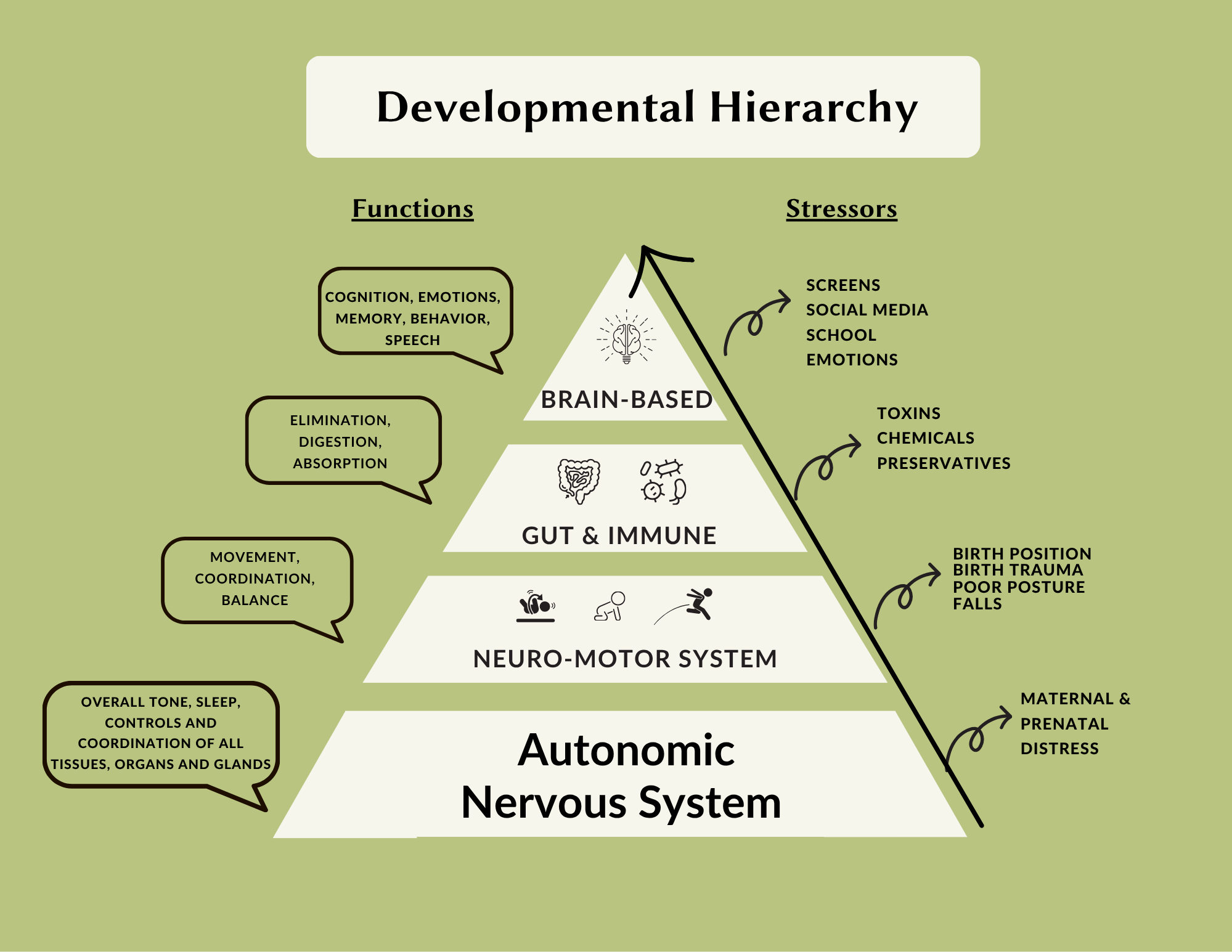
We do not think of healing as a collection of unrelated symptoms. We think about the nervous system and development in layers.
At the foundation is autonomic regulation. The body needs the capacity to appropriately activate, recover, regulate internal systems, and adapt to stress.
Above that is neuro-motor organization. The nervous system needs good information coming from movement, muscles, joints, posture, balance, and the body itself.
Then comes the gut and immune layer.
Above those foundations we begin asking more of higher-level systems involved in learning, attention, emotional regulation, executive function, and behavior.
Parasites belong in the gut and immune layer.
That does not make them unimportant. It means sequence matters.
If we jump directly to the gut because the symptoms seem to fit parasites while the autonomic and neuro-motor foundations underneath are struggling, we may be asking a higher layer of the system to change before the lower layers are prepared to support it.
The gut and immune system do not sit at the bottom of the pyramid. They rely on the regulatory foundation underneath them.
Why Parents Sometimes Spend Hundreds of Dollars and See Almost Nothing Change
This is one of the most frustrating parts of the parasite and gut-health world.
A parent recognizes the symptoms, researches extensively, purchases a highly recommended cleanse, adds supplements, binders, or gut-support products, and expects to finally see the changes they have been looking for.
Then very little happens.
Sometimes the product simply was not the right fit. But sometimes the bigger issue may be timing.
The symptoms can fit beautifully inside the parasite box while the child’s body still lacks the reserve needed to respond well to everything being asked of it.
If the nervous system is already depleted, sleep is poor, bowel function is struggling, nutrition is compromised, the child is constantly stressed, or the system has very little capacity to adapt, simply adding an aggressive cleanse does not automatically create healing.
The body still has work to do. It has to maintain hydration, eliminate waste, manage immune activity, absorb nutrients, repair tissue, adapt to physiological changes, and recover.
All of that requires capacity.
This is why we encourage families to think about a sequence of healing rather than symptom chasing.
A cleanse can be excellent and still accomplish very little at the wrong time. A supplement can make perfect sense on paper and still disappoint when the nervous system underneath it is not prepared for the next layer of work.
The question therefore becomes more than, “What can we give this child?”
We also want to ask, “What is this child’s body prepared to do right now?”
Building the Host Before Asking the Body for More
When we talk about preparing the body, we are not talking about ignoring a significant infection or delaying appropriate medical care when it is needed. We are talking about looking at the whole child instead of immediately piling more demand onto a system that is already overwhelmed.
We want to improve regulation, sleep, movement, hydration, nutrition, bowel regularity, recovery, and overall neurological capacity. Then, as families begin working on the gut and immune layer with the appropriate professionals and supports, the foundation underneath that work is stronger.
This is fundamentally different from symptom chasing.
Instead of saying, “This symptom means parasites, so let’s cleanse,” we ask, “Where is this child in the healing process, what layer needs attention first, and how much capacity do they have for what we are asking them to do next?”
This Is Why We Use Neurological Scans
This is where our neurological scans become especially valuable.
The scans do not tell us whether a child has parasites. They help us evaluate the nervous system underneath the gut, immune, behavioral, and developmental concerns the family is seeing.
We use HRV, thermal scanning, and surface EMG to look at patterns of autonomic regulation, neurological stress, muscular activity, and adaptive reserve. Together with the child’s history, development, sleep, movement, digestion, and stress load, those scans give us another window into how much work the nervous system appears to be doing and how efficiently it is adapting.
That matters for timing.
If a child comes in with a nervous system that appears highly depleted, poorly adaptable, and spending enormous resources simply getting through ordinary daily demands, we may think differently about immediately piling multiple new protocols onto that child.
As regulation improves and the scans begin showing stronger patterns of reserve and recovery, we have more information about how the child is progressing through the sequence of healing.
We are not using the scans to identify the parasite.
We are using them to better understand the host who has to do the healing.

What Do Chiropractic Adjustments Actually Do?
An adjustment does not kill parasites, cleanse the gut, or identify an infection. The adjustment works at the neurological foundation.
A chiropractic adjustment provides specific mechanical and sensory input through receptors in the joints, muscles, and surrounding tissues. That information travels through the spinal cord and into areas of the brain involved in sensory processing, movement, prediction, coordination, and autonomic regulation.
In simple terms, an adjustment gives the brain new information from the body.
Our goal is to reduce neurological interference and improve the quality of communication between the brain and body so the nervous system has better information available to organize its response, regulate internal systems, adapt to stress, and recover.
This is why repetition matters. The nervous system changes through repeated input and experience, not through one perfect adjustment. As care progresses, we continue watching the child’s scans, sleep, recovery, movement, digestion, behavior, and overall reserve to better understand when the nervous system appears ready for the next layer of support.
Respect the Sequence of Healing
Parasites may absolutely deserve exploration for some families, but the goal is not to jump from one symptom list to another or continually ask, “What can we kill, remove, bind, supplement, or detox next?”
The better question is:
What does this body need in order to become more capable of healing?
Sometimes that means addressing an internal stressor. Sometimes it means supporting the gut. Sometimes it means rebuilding nutrition. Sometimes additional medical evaluation is appropriate.
And sometimes, before we ask the body to do any of those things effectively, we need to strengthen the nervous-system foundation underneath it.
That is why the developmental pyramid matters.
Regulation first. Neuro-motor organization next. Gut and immune support built on top of that foundation. Higher-level function follows as the system gains capacity.
The symptoms may fit inside the parasite box, but a cleanse can still accomplish very little at the wrong time.
The deeper question is not simply, “What might be living inside this body?”
It is:
“How much capacity does this body have to deal with what life is asking of it?”
Because ultimately, the goal is not simply to remove another stressor. It is to build a nervous system and a body that are increasingly capable of adapting, recovering, and healing.