ADHD Is More Than An Attention Problem

What Focus, Movement, Impulsivity, and Regulation Tell Us About the Nervous System
A child can spend 45 minutes building an elaborate Lego set, remember every detail of a favorite video game, and talk endlessly about dinosaurs, yet struggle to finish a simple worksheet without getting up six times.
That can be confusing for parents. If they can focus that intensely on something they love, why can’t they just focus at school? If they can remember every fact about a favorite subject, why do they forget what you asked them to do thirty seconds ago? If they can sit still for a movie, why do they need to move constantly during homework?
These questions are part of why ADHD is so often misunderstood.
ADHD is not simply a problem of “not paying attention.” Attention is a complex neurological process that depends on arousal, motivation, sensory filtering, working memory, impulse control, movement, reward, emotional state, sleep, and the brain’s ability to decide what matters most in a given moment.
When we reduce ADHD to attention alone, we miss a much bigger nervous-system conversation.
Attention Is Not an On-Off Switch
Most people think of attention as though it is something we either have or do not have. But attention is dynamic.
The nervous system is constantly deciding what information deserves priority. It has to filter sounds, movement, visual input, internal sensations, emotional cues, thoughts, memories, and environmental demands while still maintaining enough activation to stay engaged.
That is a huge amount of work.
A child with ADHD may not have an inability to focus. They may struggle with regulating where attention goes, how long it stays there, how easily it shifts, and how much stimulation is needed to remain engaged.
This is why hyperfocus can exist right alongside distractibility. When something is highly interesting, rewarding, novel, urgent, or emotionally engaging, the brain may lock in beautifully. But when the task is repetitive, low-interest, delayed in reward, or requires sustained effort without immediate feedback, the nervous system may have a much harder time maintaining the right level of activation.
That is not the same thing as laziness.

Sometimes Movement Is Helping the Brain Pay Attention
One of the most important things parents can understand is that movement is not always the opposite of focus.
For some children, movement may actually help support attention. The nervous system uses movement to increase sensory input, regulate arousal, and create more information for the brain. Tapping a foot, shifting in a chair, standing while working, chewing, doodling, pacing, or fidgeting can sometimes be attempts to increase the level of stimulation needed to stay engaged.
From the outside, it can look like the child is not paying attention. Neurologically, they may be trying to help themselves pay attention.
This does not mean every movement should be ignored or that all classroom expectations should disappear. It means the behavior may be serving a regulatory purpose, and understanding that purpose can help us respond more intelligently.
Sometimes an Exhausted Nervous System Looks Hyperactive
One of the most confusing things about children is that exhaustion does not always look like slowing down. Sometimes it looks like the exact opposite.
A child who is running low on neurological capacity may become louder, sillier, more impulsive, more emotional, or almost driven to move. Parents see this all the time at bedtime. A child can be clearly exhausted and yet suddenly seem to find another gear.
This can happen because the nervous system still has a job to do: stay awake, stay engaged, and keep functioning. When capacity is falling, increasing activation may temporarily help the brain remain online. Movement, novelty, excitement, and stimulation can all provide input that temporarily increases alertness.
This is important because we can easily look at a highly active child and assume they have too much energy when, in some situations, they may actually be running on very little reserve.
The question is not simply, “Why is this child so hyper?” Sometimes it is worth asking, “What is their nervous system doing to keep itself going?”
The Brain Has to Decide What Matters
Attention depends heavily on filtering.
Imagine sitting in a classroom. There is a pencil tapping, someone whispering, fluorescent lights humming, a chair scraping, papers moving, the teacher speaking, your stomach feeling hungry, and a thought about what happened at recess.
A well-regulated nervous system has to decide which of those signals deserve attention and which can be pushed into the background.
That process is not effortless for every child.
Some children seem to notice everything. They hear every sound. They feel every movement. They notice the student across the room. They are aware of the tag in their shirt, the conversation in the hallway, the clock on the wall, the smell in the room, and the sensation in their own body.
When the nervous system has difficulty filtering and prioritizing information, attention becomes more expensive. It takes more effort to stay with the task because the brain is constantly being asked to sort through competing input.
This is one reason sensory processing and attention are often closely connected.
Working Memory Is Part of the Problem Too
Another common misunderstanding is assuming that a child did not listen simply because they did not follow through.
A parent may say, “Go upstairs, put your shoes away, brush your teeth, and bring your backpack down.” The child goes upstairs, sees a toy, remembers something else, hears a sibling, and five minutes later has completed none of the original tasks.
It may look like defiance.
But working memory, the ability to hold information in mind long enough to use it, is part of executive function and can be difficult for many people with ADHD.
The child may genuinely have heard you. The information simply did not stay online long enough to guide the next several actions.
This is why shorter instructions, visual cues, routines, and breaking tasks into steps can help. They reduce the amount of information the nervous system has to hold and organize at once.

Impulsivity Is Often a Timing Problem
Impulsivity is another core part of the ADHD conversation.
We often think of impulse control as a moral issue: “You knew better, so why did you do it?”
But inhibition requires timing.
The brain has to detect an impulse, hold it long enough to evaluate the situation, compare the action to previous experience, predict the likely outcome, and then choose whether to act. That process depends heavily on executive networks, including the prefrontal cortex.
When those systems are developing differently or are under greater regulatory strain, the gap between impulse and action can become very short.
The child may know the rule. The problem is getting the rule online fast enough to interrupt the action.
That distinction matters because it changes how we teach. Instead of relying only on consequences after the fact, we can also work on creating environments, routines, supports, and neurological capacity that give the child more time between urge and response.
Emotional Regulation Belongs in the ADHD Conversation
Many parents are surprised by how emotional ADHD can look.
Frustration may escalate quickly. Small disappointments can feel enormous. Transitions can be hard. Criticism may land deeply. A child may go from excited to devastated in minutes.
This is not simply “being dramatic.”
Attention and emotional regulation share many of the same executive systems. The brain has to shift attention away from the upsetting event, inhibit the first reaction, hold perspective, and recruit higher-level control.
When the nervous system is already overloaded, tired, hungry, overstimulated, or operating with very little reserve, all of that becomes harder.
This is why a child may do beautifully early in the day and fall apart after school.
Their brain did not suddenly forget how to regulate. Their available capacity changed.
Sleep Can Change Everything
Sleep deserves a major place in any conversation about attention.
A tired nervous system has a harder time regulating attention, impulse control, emotional responses, working memory, and sensory processing.
And interestingly, tired children do not always look tired. Some become more hyperactive. They move more, talk more, become silly, impulsive, emotional, or restless. The nervous system may increase activation in an effort to keep the brain online.
This is why sleep problems can sometimes amplify ADHD-like behaviors and why attention should never be evaluated in isolation from sleep quality.
The same is true for breathing and airway issues, stress load, sensory overwhelm, nutrition, movement, and overall neurological regulation.
These factors do not “cause ADHD” in a simple way, but they can absolutely influence how much capacity the nervous system has available.

What About Caffeine, Saffron, and the Supplements Everyone Is Talking About?
Parents are constantly hearing about the newest supplement, herb, or “focus support.” Right now, saffron is getting a lot of attention. There is some early research looking at saffron and attention-related symptoms, but the evidence is still limited. That is why we do not want to chase a supplement simply because it is trending.
The bigger question is, “What is this nervous system trying to do?”
Two children can both look restless, distracted, or impulsive while having very different patterns underneath. One may be exhausted and trying to increase activation. Another may be overloaded by sensory input. Another may have very little reserve left after poor sleep, stress, or constant neurological demand.
This is also why caffeine is such an interesting example. Some adults say caffeine helps them feel more focused or organized rather than simply more energized. Stimulation can temporarily help some nervous systems increase alertness or maintain the level of activation they need to function. That does not make caffeine a solution for a child, but it reminds us that “hyperactive” behavior does not always mean the brain has too much useful activation.
There is another important piece to understand: the nervous system adapts. With repeated exposure to certain substances, the body can become less responsive to the same amount. This is often called tolerance. Someone may begin needing more of the same substance to create the effect they once got from less.
That is one reason we want to be cautious about relying on outside inputs to continually change neurological state. A supplement, caffeine, sugar, screens, novelty, or other stimulation may change how someone feels in the moment, but changing the state is not necessarily the same thing as improving the underlying regulation of the nervous system.
So rather than stopping at, “It worked,” we want to ask, “What did it change, why did this nervous system need that change, and what is still happening underneath?”
That is where the deeper nervous-system conversation begins.
ADHD Is Not One Thing
This may be one of the most important concepts in the entire article.
Two children can both have ADHD and look completely different.
One may be constantly moving and impulsive. Another may sit quietly and daydream. One may be emotionally intense. Another may seem disconnected. One may struggle academically. Another may be gifted and perform extremely well while using enormous amounts of energy just to keep up.
This is why labels alone do not tell us how a nervous system is functioning.
A diagnosis can be useful, but we still need to understand the individual child.
How do they sleep? How do they move? How do they respond to sensory input? What is their developmental history? How much stress are they carrying? What environments help them thrive? What environments overwhelm them? Do they have enough reserve to meet the demands placed on them?
Those questions take us deeper than attention alone.
Regulation Comes Before Performance
This is a principle we come back to often.
A nervous system has to be sufficiently regulated before higher-level performance can happen consistently.
Focus requires energy. Working memory requires energy. Impulse control requires energy. Learning requires energy. Emotional regulation requires energy.
If a child is spending a huge portion of their neurological resources filtering sensory input, managing stress, compensating for poor sleep, or simply trying to maintain the right level of activation, there may be less capacity left for schoolwork, behavior, or executive function.
That is why the same child can look completely different in two environments.
At home, they may be dysregulated. At school, they may hold it together. In a quiet room, they may focus well. In a noisy room, they may struggle. On one day, they may succeed. On another, they may not.
The task did not necessarily change. Their nervous system state did.
What Do We Look at in Our Office?
At Purpose Driven Chiropractic, we do not diagnose ADHD.
We are interested in understanding how the nervous system is functioning beneath the behaviors parents are seeing.
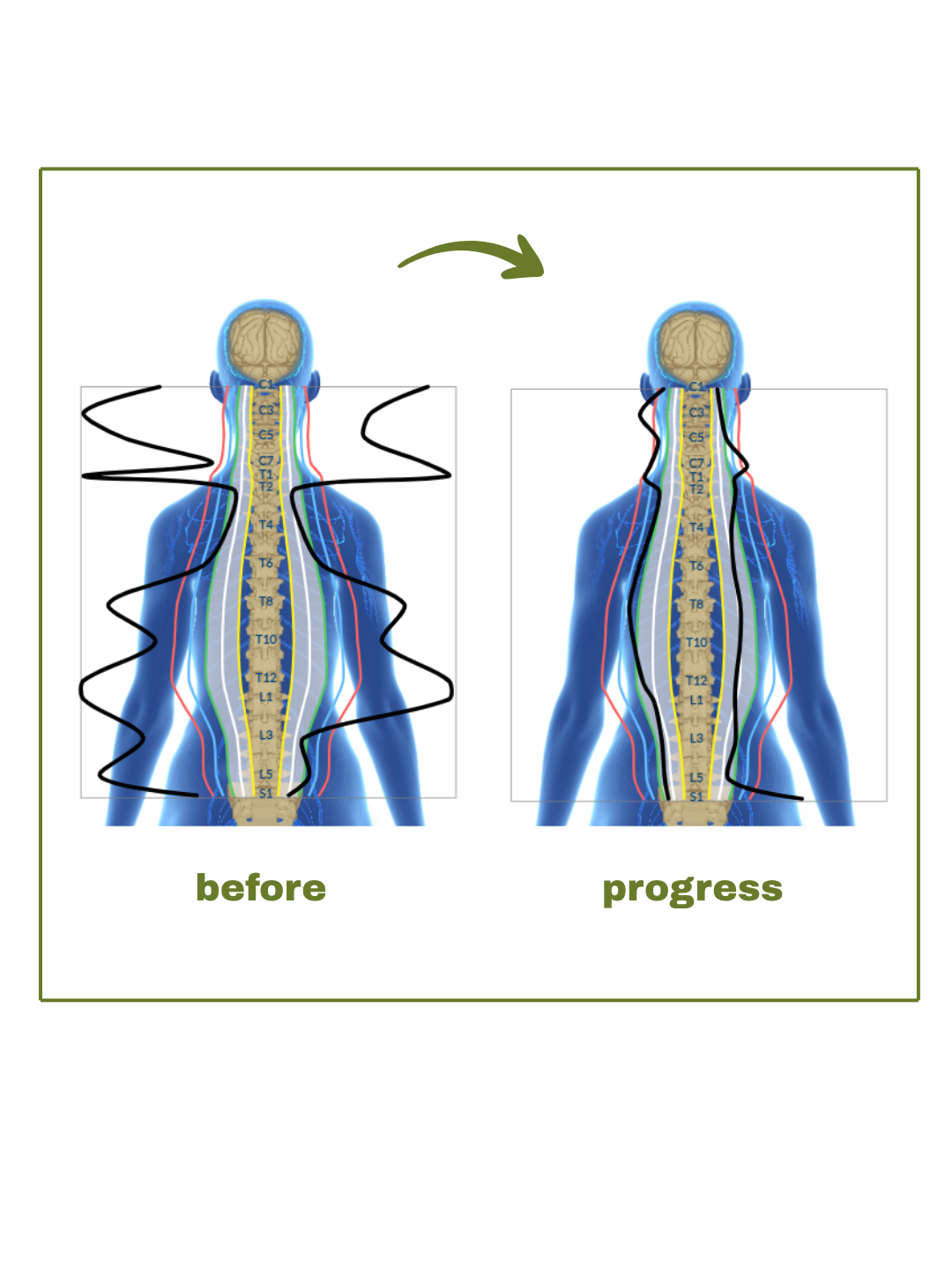
We look at autonomic regulation, muscular activity, stress patterns, developmental history, movement, sensory processing, sleep, recovery, and the child’s overall adaptive capacity.
Our neurological scans help us look for patterns in how the nervous system is regulating and how much reserve may be available.
This does not tell us everything about a child, but it gives us another window into the system that is organizing attention, movement, behavior, and stress responses.
Where Chiropractic Fits
Chiropractic care is not about treating ADHD. Our focus is on the nervous system and the quality of communication between the brain and body.
An adjustment provides specific mechanical and sensory input through receptors in the joints, muscles, and surrounding tissues. That information travels through the spinal cord toward the brainstem, cerebellum, cortex, and other networks involved in sensory processing, movement, prediction, and autonomic regulation.
In simple terms, an adjustment gives the brain new information from the body.
Our goal is to reduce neurological interference and improve the quality of communication between the brain and body so the nervous system has better information available to organize, adapt, and respond.
We are not adjusting a child to “make them focus,” and we are not trying to force the nervous system into a calm state. We are trying to create better conditions for regulation.
When a nervous system becomes more organized and adaptable, it may have more capacity available for the higher-level work parents care about, including attention, learning, impulse control, emotional regulation, movement, sleep, and recovery.
This is also why repetition matters. The nervous system changes through repeated input and experience. One night of good sleep does not rebuild months of exhaustion, and one afternoon of movement does not establish an entirely new motor pattern.
Our goal is not simply better behavior in the moment. It is greater capacity underneath the behavior.
Support the Nervous System, Not Just the Behavior
Parents often feel enormous pressure to fix the behavior they can see.
Sit still. Pay attention. Stop interrupting. Finish the assignment. Control your emotions.
Those expectations may still matter, but behavior is the final output of a much larger neurological process.
Sometimes we need to ask what happened before the behavior. Was the child overloaded, understimulated, tired, hungry, anxious, distracted by sensory input, struggling to hold the instruction in working memory, needing movement, or simply running out of neurological reserve?
When we understand the system better, we can choose better supports.
The Goal Is Not to Make Every Brain Work the Same
ADHD is not simply a list of deficits.
Many people with ADHD are creative, energetic, curious, intuitive, innovative, highly driven, deeply interested, and capable of extraordinary focus when something matters to them.
The goal should not be to erase those qualities.
The goal is to help the nervous system become more flexible.
Can the child engage when the task is not exciting? Can they shift when needed? Can they recover after frustration? Can they recognize when they need movement or rest? Can they filter enough sensory information to stay present? Can they access higher-level control when demand increases?
That is a much more useful way to think about regulation.
Focus Is a Nervous System Skill
When we understand ADHD this way, the conversation changes.
Instead of asking, “Why won’t they focus?” we can ask, “What does this nervous system need in order to focus?”
Instead of asking, “Why can’t they sit still?” we can ask, “Is movement helping this nervous system stay organized?”
Instead of asking, “Why are they so impulsive?” we can ask, “How much time does their brain have between impulse and action?”
Instead of asking, “Why are they so emotional?” we can ask, “How much capacity is available for regulation right now?”
These questions do not remove responsibility or expectations. They give us a more accurate place to start.
Because attention is not simply about trying harder. It is about how the nervous system filters, activates, organizes, shifts, remembers, inhibits, and recovers.
And when we begin there, we can understand the child far more clearly.
Want to Understand Focus More Deeply?
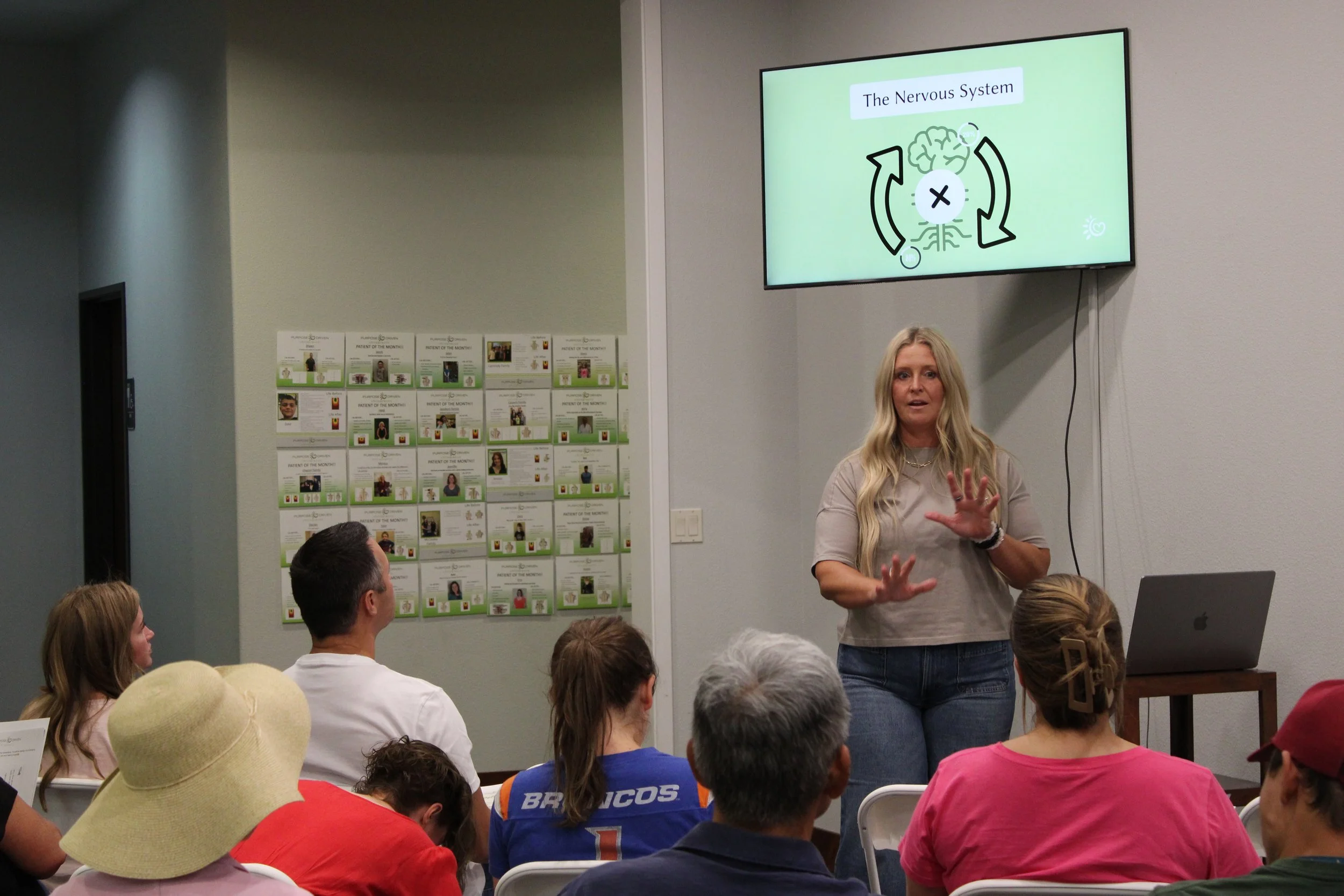
If your child struggles with focus, impulsivity, emotional regulation, sensory overload, or constantly needing to move, our upcoming Focus Workshop will take a deeper look at how the nervous system influences attention, learning, behavior, and regulation.
We will break down the neurological foundations behind focus and help parents better understand what may be happening beneath the behaviors they see every day.