

Why Crawling Matters More Than Most People Realize
Crawling is Where Wiring Happens
Most people think crawling is about learning how to move. In reality, crawling is about learning how to think, regulate, coordinate, and connect.
Before a baby ever learns to read, write, focus, sit still, or manage emotions, their nervous system must learn how the left and right sides of the body communicate. It must learn how pressure, movement, vision, balance, and posture come together into a single organized system.
Crawling is where that wiring happens.
It is the first time the brain learns how to integrate two hemispheres into one coordinated experience. It is the first time the spine learns to stabilize while moving. It is the first time the hands bear weight, send pressure signals to the brain, and begin building the foundation for fine motor skills like grasping, writing, and coordination.
Crawling is not a phase the body passes through.
It is a neurological construction project.
When it happens fully, the brain and body build strong, efficient pathways. When it is rushed, skipped, or limited, the nervous system adapts, but often with compensations that show up years later in ways parents never connect back to crawling.
What Left and Right Brain Integration Really Means
When we talk about left and right side integration, we are not talking about personality or learning styles. We are talking about communication between the two hemispheres of the brain.
The left side of the brain plays a major role in sequencing, language, and detail. The right side supports spatial awareness, emotional processing, and regulation. For the brain to work efficiently, these two hemispheres must constantly share information through a structure called the corpus callosum.
Crawling is one of the primary ways this connection strengthens.
As a baby crawls, the right arm moves forward with the left leg, then the left arm moves with the right leg. Each cross pattern movement forces the brain to coordinate both hemispheres at the same time. Over thousands of repetitions, neural pathways strengthen and timing improves.
This integration later supports reading, writing, coordination, emotional regulation, posture, and the ability to stay organized while processing information.
How Crawling Organizes the Spine and Nervous System Together
Crawling is one of the first times the spine must stabilize while the limbs move independently.
As a baby crawls, gentle alternating pressure moves through the spinal joints. This activates receptors that tell the brain where the body is in space and how it is moving. Over time, this builds deep postural awareness and stability.
This process creates neurological feedback between the spine, brainstem, and cerebellum. The nervous system learns how to balance mobility and stability at the same time. That skill later supports sitting posture, athletic coordination, balance, and endurance throughout life.
When crawling is shortened or replaced with early walking or prolonged time in containers, the spine may not fully develop these stabilizing patterns. The body adapts, but often with compensation patterns that can appear as poor posture, asymmetry, or spinal tension later on.
Why Hand Pressure During Crawling Matters So Much
One of the most overlooked aspects of crawling is weight bearing through the hands.
When a baby crawls, the palms press into the ground repeatedly. This pressure activates sensory receptors that send powerful feedback to the brain about position, force, and control. These signals help develop hand strength, wrist stability, and fine motor coordination.
The brain learns how to regulate pressure through the hands long before a child ever picks up a pencil. Crawling strengthens the shoulders and wrists while building the foundation for handwriting, grasping, and coordinated movement.
Children who struggle with handwriting or fine motor endurance often show signs of incomplete early sensory integration. Crawling provides the nervous system with the rich input it needs to organize those skills from the beginning.
Crawling and Nervous System Regulation
Crawling also teaches the nervous system how to regulate effort and calm.
Each movement requires activation followed by adjustment. The baby shifts weight, pauses, stabilizes, and continues forward. This rhythmic pattern helps the brain learn how to move between activation and rest without becoming overwhelmed.
This early experience builds the foundation for emotional regulation and sensory processing. When crawling is limited, the nervous system may remain more reactive or struggle to settle, not because something is wrong, but because the foundational pathways need more support.
What If Crawling Was Missed or Looked Different
Many children never crawl on hands and knees in the traditional way. Some scoot. Some army-crawl. Some roll or go straight to standing and walking. This does not mean something is wrong or that development cannot continue. The nervous system is incredibly adaptable, and the brain is always capable of learning new patterns when it receives the right input.
What matters is not forcing a child back into a milestone, but giving the nervous system opportunities to experience the kinds of movement and sensory input that crawling provides. Cross pattern activities, weight bearing through the hands, and rhythmic floor play can help the brain revisit those foundational pathways in a natural and supportive way.
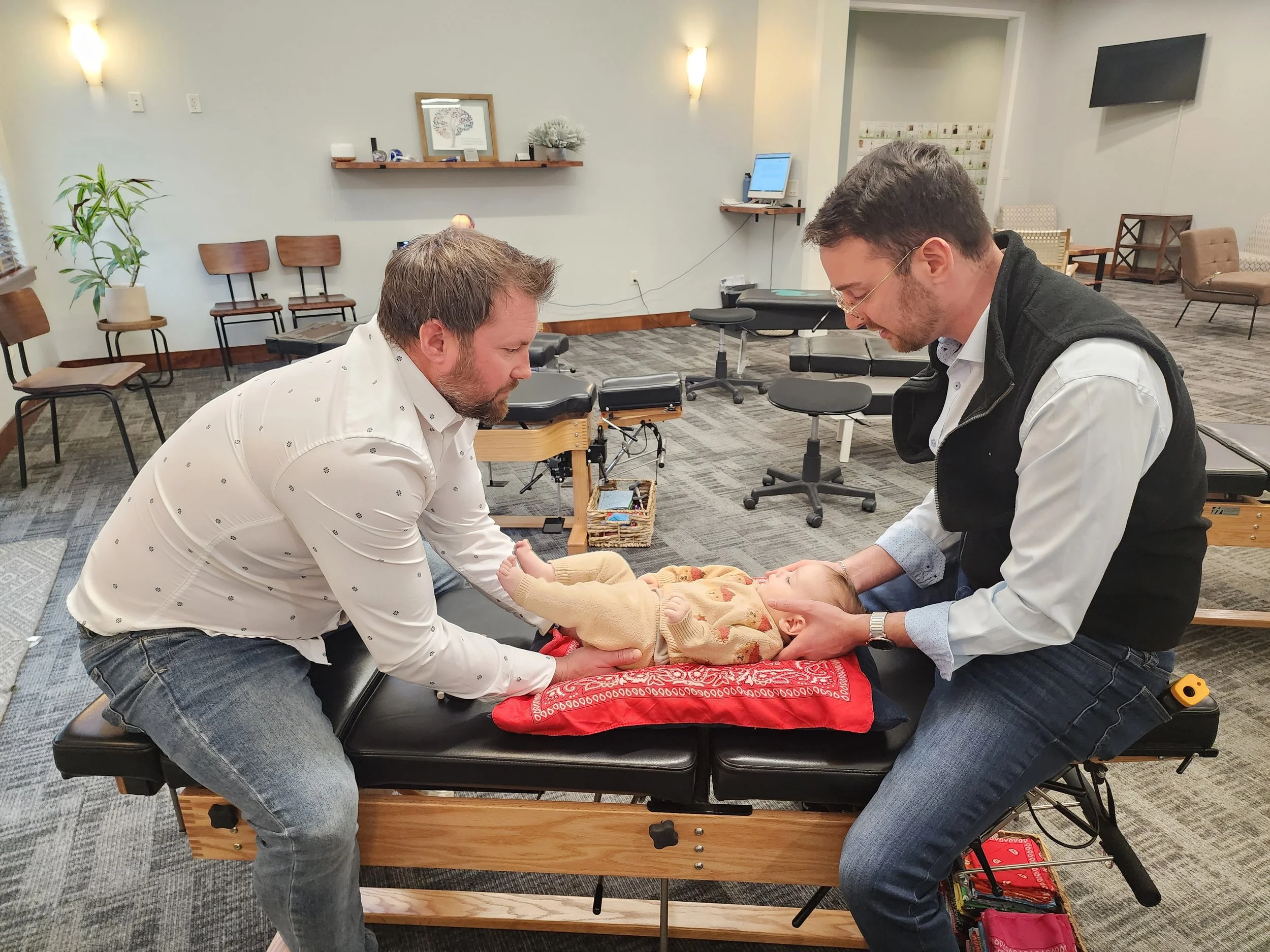
Chiropractic care also plays an important role. When spinal tension or neurological stress is present, certain movements may feel uncomfortable or inefficient, which is why some babies avoid hands and knees crawling altogether. By reducing that tension and improving communication between the brain and body, children often begin to explore movement more freely and confidently, even long after infancy.
Why Getting on the Ground Matters for Both of You
One of the simplest and most powerful things parents can do is get down on the floor and move with their child. Crawling together, playing on hands and knees, pushing through the palms, or moving through playful obstacle style movement provides the nervous system with rich sensory feedback that strengthens coordination and regulation.
This kind of movement is not only beneficial for children. Adults benefit too. Crawling reintroduces pressure through the hands, activates cross pattern coordination, and gently engages the core and spine in a way modern life rarely allows. Many adults notice improved mobility, better posture awareness, and a surprising sense of calm after incorporating simple floor based movement.
You do not need perfect form or a specific routine. The goal is simply to reconnect the brain and body through movement that feels safe and playful.
Development is never truly finished. The nervous system is always capable of learning. And sometimes the most powerful therapy begins by getting back on the ground.
