

What Does Your Gut Have to Do With Focus?

The Vagus Nerve, Attention, and the Brain-Body Connection
We tend to think of focus as something that happens entirely inside the brain.
A child is distracted, forgetful, restless, impulsive, or unable to stay on task, so naturally we look at attention.
But the brain is not operating by itself. It is constantly receiving information from the body, including the gut. That means the ability to focus is influenced not only by what is happening around a child, but also by what is happening inside them.
Are they hungry? Constipated? Bloated? Uncomfortable? Running on very little sleep? Is their digestive system under stress? Is their nervous system spending enormous amounts of energy managing internal signals before the schoolwork even begins?
This is where the vagus nerve and the gut-brain connection become incredibly interesting.
The Gut and Brain Are Always Talking
The gut and brain communicate through the autonomic nervous system, the enteric nervous system, immune signaling, hormones, microbial activity, and the vagus nerve.
The vagus nerve is one of the major communication pathways in that system, and much of that communication carries information from the body toward the brain.
That means the brain is constantly receiving updates about what is happening internally: digestion, fullness, discomfort, inflammation, hunger, and whether the body is in a state that supports rest and recovery.
That matters because attention depends partly on the brain deciding what information deserves priority.
Focus Requires the Brain to Filter Information
Imagine trying to complete homework while someone repeatedly taps you on the shoulder.
Even if you are trying hard to concentrate, part of your attention keeps getting pulled toward the interruption.
Internal sensations can work the same way.
Constipation, hunger, nausea, bloating, urgency to use the bathroom, or digestive discomfort are all information the nervous system has to process.
The child may not consciously think, “My gut is distracting me.” They may simply become restless, impatient, irritable, distracted, or unable to sit through the task.
This is why focus is not just about whether a child wants to pay attention. The nervous system has to decide what deserves attention while continuously processing information from both outside and inside the body.
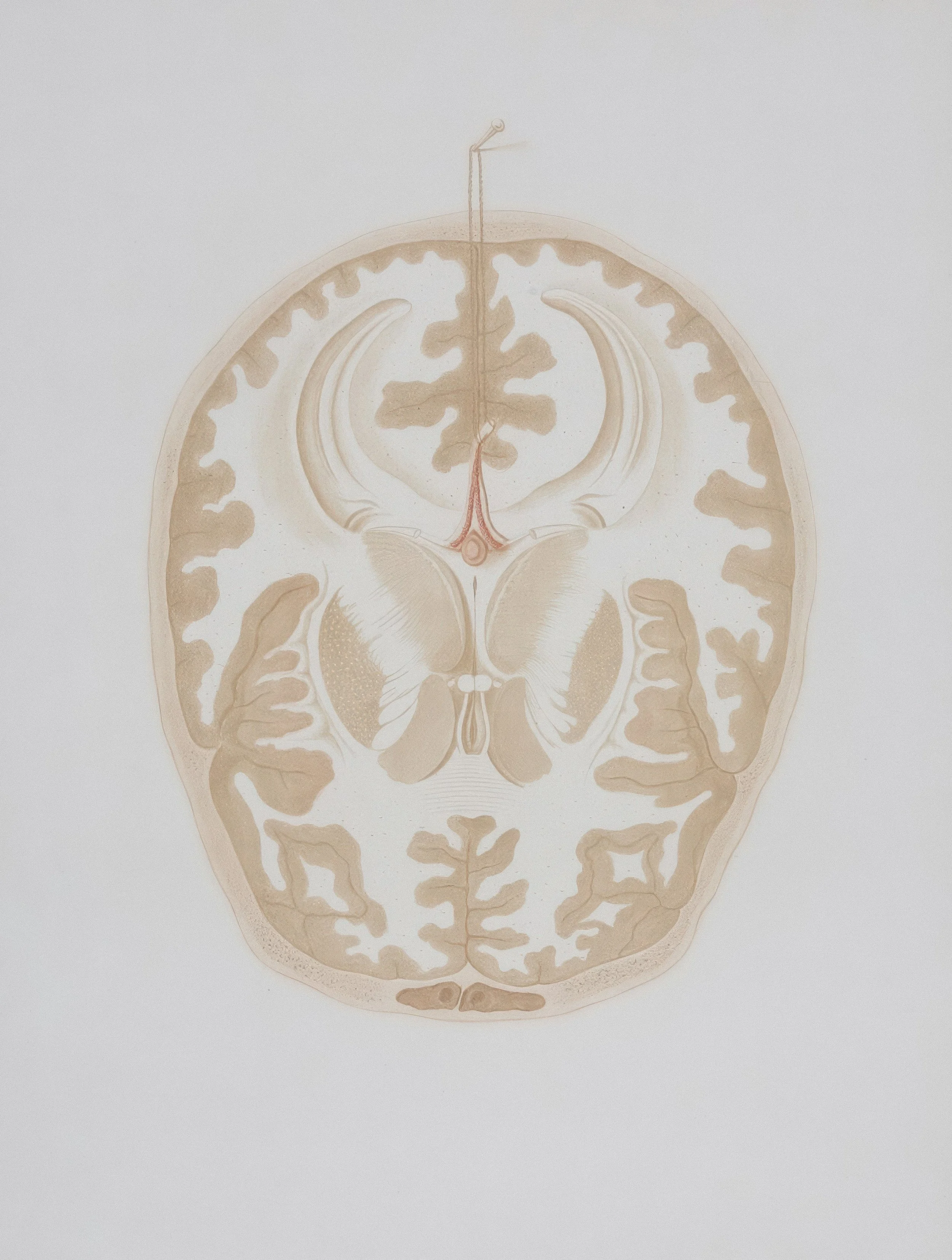
The Vagus Nerve Is Part of That Conversation
The vagus nerve travels from the brainstem through the neck and into the chest and abdomen, communicating with organs involved in heart rate, breathing, and digestion.
It is not simply a “calm nerve.” It is part of a larger communication network helping the brain understand what is happening inside the body and helping the body respond appropriately.
When that communication is efficient, the nervous system has better information to work with. When the system is overloaded, exhausted, irritated, or dysregulated, there is simply more for the brain to process.
This Is Where Interoception Matters
Interoception is the nervous system’s ability to recognize and interpret internal body signals.
A child can need to use the bathroom long before they consciously recognize what that sensation means. The same principle applies to hunger, fullness, fatigue, heart rate, breathing, gut discomfort, and emotional arousal.
One child may recognize, “My stomach hurts and I need to eat.”
Another child may simply become irritable and unable to concentrate.
The signal was there in both children. The difference is how effectively the nervous system recognized and interpreted it.
That is why gut health, interoception, and focus are all part of the same larger brain-body conversation.
Halloween Can Add More Demand
Halloween week is a simple example.
Kids may eat more candy, less substantial food, stay up later, experience more sensory stimulation, and move through a less predictable routine.
Any one of those things may be manageable. Together, they can increase the amount of work the nervous system has to do.
That does not mean sugar causes focus problems. It means the internal and external environment has changed, and the nervous system may have less reserve available for attention, emotional regulation, and impulse control.

Regulation Creates More Capacity for Focus
This brings us back to what we talk about at the Focus Workshop.
Focus is a higher-level neurological function.
Before a child can consistently access attention, working memory, impulse control, and learning, the nervous system has to manage what is happening underneath those functions.
It has to regulate the body, process sensory information, interpret internal signals, organize movement, adapt to stress, and coordinate internal systems.
Then there has to be enough capacity left for higher-level performance.
This is why we keep coming back to regulation before performance.
A brain spending enormous resources managing the body has fewer resources available for everything else.
This Is Why We Use Neurological Scans
At Purpose Driven Chiropractic, we want to understand what the nervous system is doing beneath the focus problems, gut complaints, sleep issues, and behavior parents are seeing.
That is where our neurological scans become valuable.
HRV gives us information about autonomic flexibility, adaptability, and vagal influence on the heart. It helps us see how well the nervous system appears able to shift between demand and recovery.
Thermal scanning helps us look at patterns associated with autonomic regulation and neurological stress, while surface EMG gives us information about how the nervous system is organizing muscular activity.
These scans do not diagnose ADHD, digestive problems, or vagus nerve dysfunction.
They help us better understand the state of the nervous system that has to manage all of those inputs.
A child can look distracted on the outside while the nervous system underneath is exhausted, highly activated, poorly adaptable, or using enormous amounts of energy simply to maintain regulation.
The scans help us look deeper than the behavior.
What Do Adjustments Actually Do?
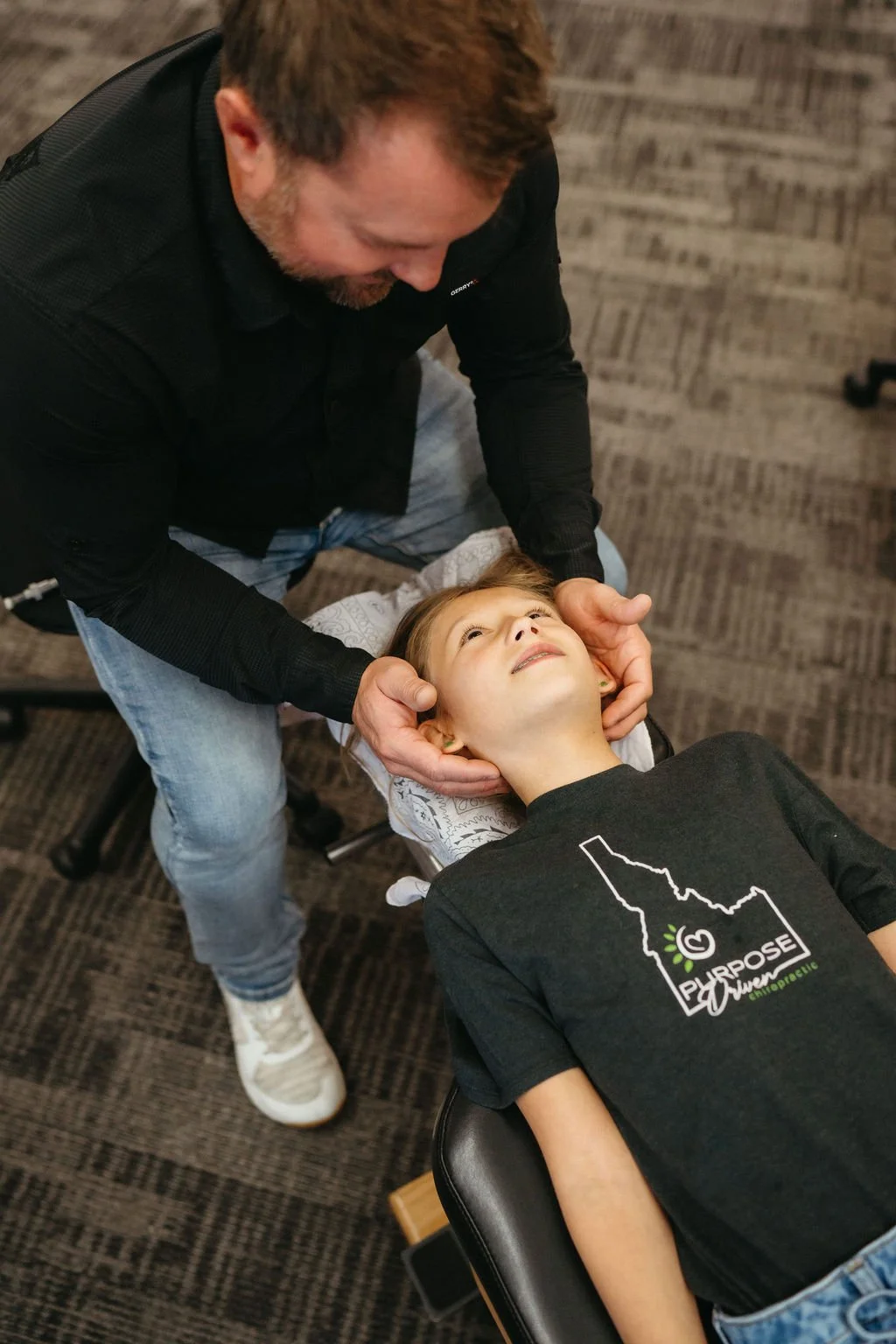
A chiropractic adjustment creates a specific mechanical input into the joints, muscles, and surrounding tissues.
Specialized mechanoreceptors detect movement, pressure, position, and change, then send that sensory information into the nervous system.
That information travels through the spinal cord and brainstem and is processed through areas involved in coordination, sensory processing, prediction, movement, and autonomic regulation.
In simple terms, the adjustment gives the brain new information from the body.
The brain then has an opportunity to process that information and update its response.
This is why we do not think of an adjustment as simply moving a bone or directly “stimulating the vagus nerve.” We are working with the larger brain-body communication system.
Our goal is to reduce neurological interference and improve the quality of sensory information reaching the brain so the nervous system has better information available to organize, adapt, and recover.
When that foundation becomes more organized, there may be more capacity available for higher-level functions like attention, learning, working memory, emotional regulation, and impulse control.
Focus Is About More Than the Brain
When a child is struggling to focus, it is tempting to look only at the behavior happening at the desk.
But focus begins long before the worksheet is placed in front of them.
It is influenced by sleep, movement, sensory processing, internal awareness, gut function, autonomic regulation, and how much reserve the nervous system has available.
The brain and body are not separate systems.
They are in constant conversation.
Sometimes, if we want to better understand what is happening in the brain, it is worth listening to what the rest of the body has been trying to say.
Don’t miss our Focus Workshop.
We’re going deep into the nervous system behind attention, learning, movement, emotional regulation, and sensory processing - and why some children can focus incredibly well in one environment and struggle tremendously in another.
If you’ve been searching for answers, this is the night for your family.
