

The Vagus Nerve: The Body’s Calm Pathway You Can Strengthen Naturally
When Calm Feels Impossible, the Vagus Nerve Is Usually Overwhelmed
Most people blame stress, personality, or willpower when they can’t settle, can’t sleep, can’t focus, or feel overwhelmed by the simplest transitions. But calm isn’t something you “try harder” to reach. Calm is something your nervous system grants you when the vagus nerve is functioning well.
The vagus nerve is the primary pathway the brain uses to shift the body out of protection and into restoration. When it’s healthy, life feels manageable. When it’s strained, even small things feel big. Children become more reactive, adults feel more anxious, and the body runs in a constant state of “on” no matter how tired it is.
Understanding the vagus nerve isn’t just interesting — it explains so many of the patterns families experience every single day.
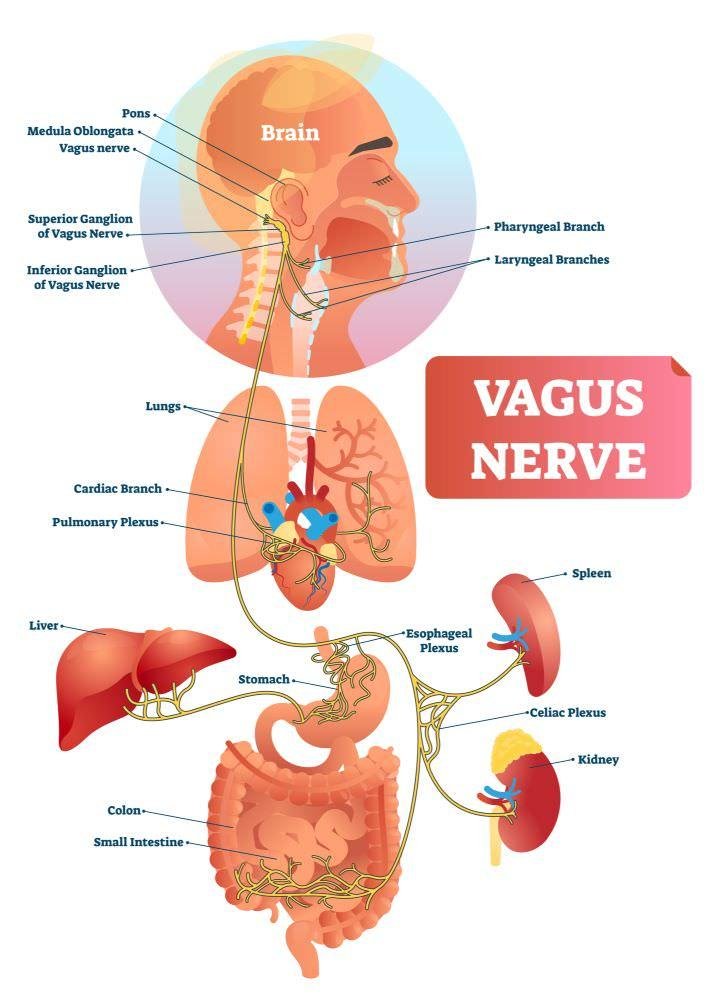
Where the Vagus Nerve Lives and What It Does
The vagus nerve begins deep within the brainstem, right behind the upper neck. From there, it travels down both sides of the neck, through the chest, and into the diaphragm, lungs, stomach, intestines, and heart. It’s the only nerve that connects the brain to the entire gut–heart–lung–immune system network.
Its job is to tell the body when it’s safe enough to slow down, digest, breathe deeply, sleep deeply, regulate emotions, and recover from stress.
When the vagus nerve fires efficiently, the body feels grounded and capable.
When it struggles, the nervous system stays braced and reactive.
How and When the Vagus Nerve Develops
The vagus nerve begins forming early in pregnancy, but it matures through experience — and birth is its first major activation. The squeeze of the birth canal, the pressure changes during delivery, the first breaths, and the early skin-to-skin contact all stimulate this nerve.
A C-section, birth interventions, or tension in the upper neck can alter this early activation. The vagus nerve may not receive the full stimulation it needs, or it may become irritated by early strain on the cranial and cervical structures.
This is why some babies enter the world already struggling with shallow breathing, digestive discomfort, difficulty settling, noisy or effortful feeding, or inconsistent sleep. Their vagus nerve and stress pathways never fully shifted into regulation.
These early patterns are neurological — not behavioral.
What “Vagal Tone” Really Means
Tone refers to how quickly and efficiently the vagus nerve can help the body recover after stress. High tone means the body can settle, shift, and reset with ease. Low tone means the system stays on high-alert far longer than it should.
Children with low vagal tone often seem wired and tired at the same time, more sensitive, easily overwhelmed, or constantly “on edge.” Adults with low tone often feel anxious, inflamed, foggy, tense, or chronically tired.
These are not personality traits.
They are signs of low vagal tone.
Why Today’s World Overwhelms the Vagus Nerve
The vagus nerve was built for rhythm, slowness, breath, pressure changes, and relational connection. Modern life offers the opposite: fast schedules, screens, shallow breathing, disrupted sleep, emotional stress, chronic inflammation, and constant sensory input.
Add in birth stress, digestive challenges, or tension in the upper neck, and the vagus nerve ends up doing far more work than it was designed for.
The result is a body that struggles to ever feel fully calm.
Subluxation and the Vagus Nerve: The Missing Link Most Families Never Hear
The vagus nerve runs directly behind the upper cervical spine — the area most affected by birth, tension, feeding stress, accidents, posture strain, and ongoing overwhelm. When this area becomes misaligned or tense, the vagus nerve can be mechanically irritated.
This irritation keeps the vagus nerve from firing the signals required to downshift into rest, digestion, and emotional regulation.
This is why so many children (and adults) with vagal issues also experience digestive trouble, sleep disturbances, big emotions, mouth breathing, anxiety, chronic congestion, or trouble settling. Their nervous system is trying to operate without its primary calm pathway.
How Neurological Chiropractic Strengthens the Vagus Nerve
Home routines like deep breathing, meditation, humming, or cold exposure can support vagal tone — but none of them address the structural interference around the vagus nerve itself.
Neurological chiropractic care works at the root.
Gentle, precise adjustments help release upper cervical tension, restore mobility to the cranial and neck structures surrounding the vagus nerve, and calm the body’s stress patterns. This restores the nerve’s ability to function efficiently.
And we don’t guess.
We measure this change.
Our Heart Rate Variability (HRV) scan shows exactly how well the vagus nerve is functioning and how much stress the nervous system has been holding. HRV is the gold standard for assessing parasympathetic strength and vagal tone.
When HRV begins to rise, we know the vagus nerve is gaining resilience.
When parents see these changes in their child (or themselves), they feel them too.
Families describe:
“My baby melted for the first time.”
“My child took a deep breath instead of exploding.”
“I feel calmer than I have in years.”
These shifts are neurological, not accidental.
When the Vagus Nerve Works Well, Life Feels Different
A healthy vagus nerve doesn’t just create calm.
It supports deeper sleep, smoother transitions, easier digestion, stronger immunity, steadier emotions, and more flexibility in daily life.
Calm stops being something you fight for.
It becomes something your nervous system can access on its own.
If You Want to Understand Vagal Tone in Your Family
You don’t have to guess why regulation feels hard.
You can measure it.
You can change it.
You can support the nervous system in a way that shifts your entire story.
A neurological evaluation shows exactly where the vagus nerve is struggling and how to help the system restore balance, resilience, and rest.
